Related: Tray Racks vs Hanging Racks: The Argument I Keep Having
I have owned eight bike racks in twelve years, and the ones that failed did it loudly: a trunk strap rack that ground grit into my hatch paint, a hanging rack that swung into a highway divider on I-70, and a tray rack that survived a deer strike outside Estes Park. That history is why I think about a 2-inch hitch bike rack the way I think about tires. It is safety equipment that happens to be convenient.
Most people shopping for a rack are making two decisions at once. The first is how the bike leaves the house. The second is where the bike lives when it gets home, because a rack that takes half an hour to mount gets used half as often, and a wall hook that pinches a brake line teaches you to dread your own garage.
So this is both halves of the question. Two hitch racks for the road, two wall mounts for the off season, and honest notes on which one belongs in your situation.
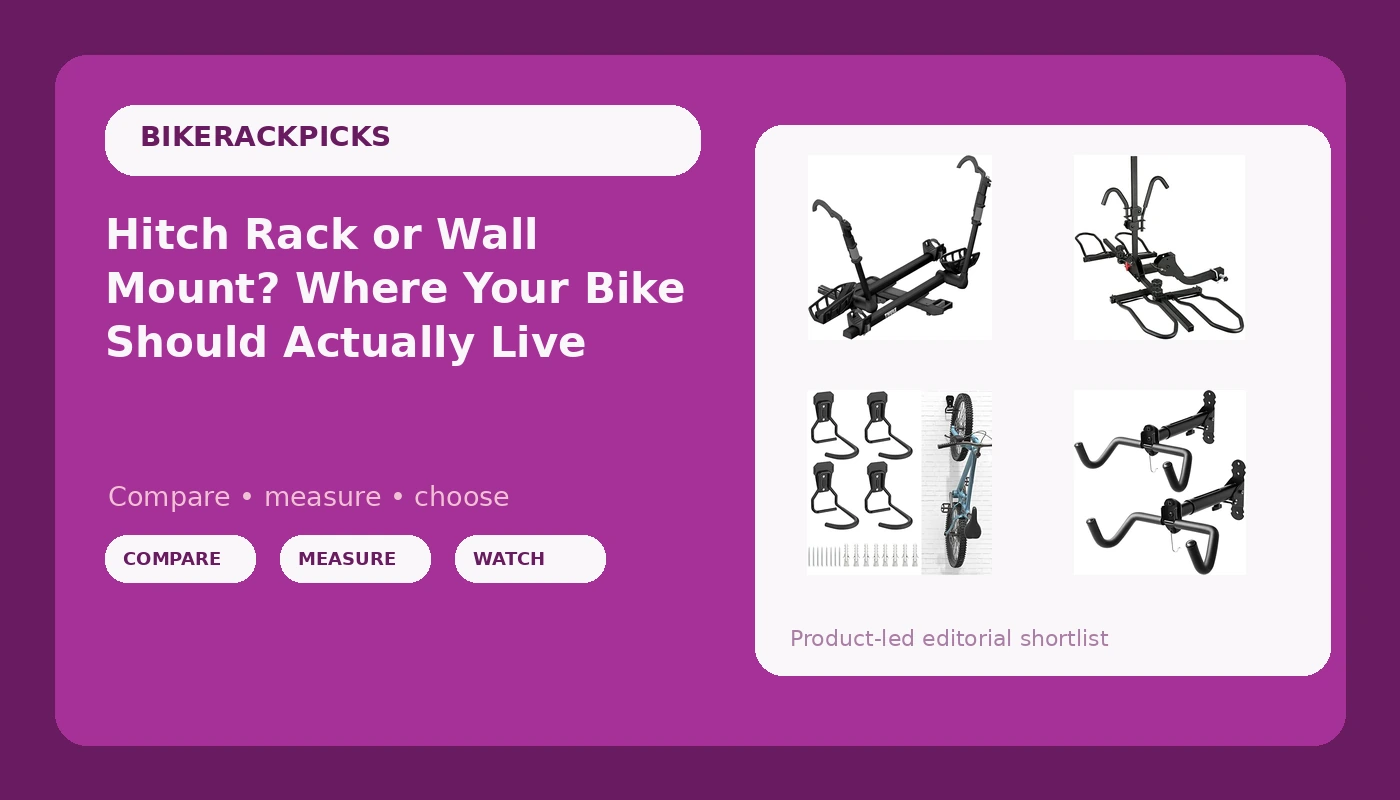
Best Overall: Thule T2 Pro XT/XTR Hitch Bike Rack
This is the rack I recommend to anyone who rides carbon, and it is the rack I would buy again if mine disappeared tonight. The T2 Pro is a tray rack, which means the bike sits in wheel trays and gets strapped down by the wheels. Nothing clamps your top tube, nothing hooks your fork, and nothing touches your frame. If you have ever watched a hanging rack press a hook against a thin carbon top tube, you already understand why that matters.
The workflow is the part I care about most. You lift the front wheel into the front tray, strap it, lift the rear wheel in, strap it, and you are done. In the dark, after a long ride, with a headlamp and cold hands, you can do it by feel, because the wheel finds the tray on its own. That is not true of every rack in this price range, and it is the difference between using the rack twice a month and using it four times a week.
It tilts away from the hatch with the bikes loaded, so you can get into the back of the car without unloading. That feature sounds like a luxury until the first time you drive home from a group ride with groceries to unload. It also folds up against the vehicle when it is empty, which keeps it out of the way in parking lots.
The honest downsides: it is heavy, it is expensive, and it belongs on a 2-inch receiver. A rack this substantial on a 1.25-inch hitch is asking the smaller platform to do work it was not designed for, and you will feel the difference in the rearview mirror. If your car only has the small receiver, spend the money on a hitch upgrade first. It is the better investment.
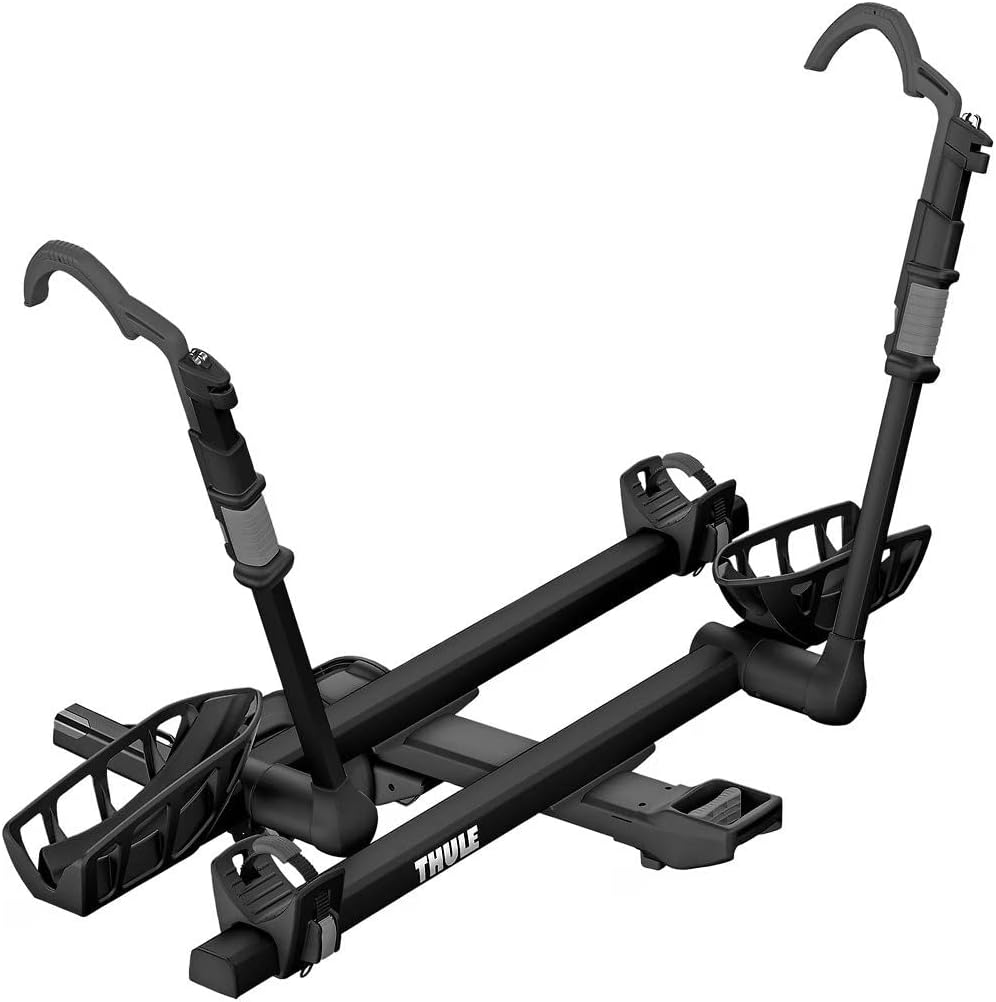
Best Value: WEIZE Hitch Bike Rack
Here is the rack for the person who wants tray loading without the premium receipt. It mounts in a 2-inch receiver, it holds two bikes up to a combined 160 pounds, and it is built to fit standard bikes, fat tire bikes, and electric bikes. That last part is the real story of the current market. The trays and wheel cradles on newer mid-tier racks have gotten wider because the bikes got wider, and a rack that cannot swallow a 4-inch tire is a rack you will outgrow in one season.
It tilts, it folds, and the manufacturer's whole pitch is that it does not wobble. I am skeptical of that word on any rack, because wobble comes from three places: the hitch bolt, the anti-rattle hardware, and the joint where the rack meets the receiver. You can control the first two yourself. Torque the hitch bolt properly, use whatever anti-rattle mechanism ships with the rack, and re-check it after the first hundred miles. Every rack I have owned has needed that follow-up check, and every one of them felt tighter afterward.
The 160-pound figure is the number to respect. An e-bike plus a regular road bike can get close to it faster than you think, and the limit covers the bikes, not the rack. Add up what you actually plan to carry before you buy, not after you have already driven to the trailhead.
Where it gives up ground to the Thule is in the small things: the finish, the lock hardware, and the general sense that everything was machined to the last millimeter. What it does not give up is the loading pattern. Wheels in trays, straps over wheels, tilt for hatch access. That is the correct design, and getting it at a mid-tier price is a genuinely good deal.
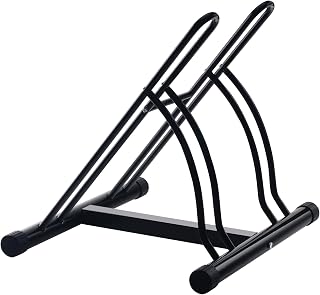
Best Wall Storage for a Whole Household: Housolution Bike Wall Mount, 4 Pack
Four hooks in one box is the correct answer for a family garage. One order covers the whole household, and the fixed hook design means you are not fiddling with a folding arm every time you hang a bike. Fixed hooks stick out from the wall permanently, which is a feature in a garage where the wall is already spoken for and a problem in a narrow hallway where you walk past it every day.
The thing to measure before you drill is handlebar and saddle clearance. Hook spacing and height decide whether four bikes nest together or fight for the same six inches of air. Hang the tallest bike first and work down. If you are storing a bike you ride weekly, keep it at chest height. If you are storing a bike you ride twice a year, the high hook is fine and it frees the wall for the bikes you actually touch.
This is not a security product and it is not a travel product. It is floor space, and floor space in a garage is worth more than most people admit until they cannot park in it.
Best Single-Bike Indoor Hanger: Gootus Bike Wall Mount Hanger
A horizontal wall hanger is the apartment answer. The bike sits flat against the wall instead of standing out into the room, which means it uses vertical space you were never going to use anyway. For a one-bike household, or for the bike you ride most often and want at arm height, this is a cleaner solution than a floor stand that you will trip over in the dark.
Because it is horizontal, check where the contact points land. You want the hanger holding the bike at a point that keeps weight off a derailleur, a brake hose, or a hydraulic line. Two minutes with a tape measure before you drill saves you a season of small annoyances, and it is the difference between a hanger that feels invisible and one you resent.
How I judge a rack
I run every rack through the same three modes.
Load test. Mount time, first try. Then loading a bike in the dark with cold hands. If I have to think about the order of operations, the rack loses points. If the wheel finds the tray by feel, it gains them.
Highway run. Wobble at 75 mph, mirror view, and whether the rack blocks the backup camera. A rack that rattles no matter how you tighten it goes in the no column, permanently. That is not a preference. It is a safety observation, and it is the single most common complaint I hear from other riders.
Buyer's chair. What should a weekend gravel rider with a 2-inch hitch actually buy? Usually the answer is a tray rack in the mid-tier range, plus a wall mount so the bike is not leaning against the car between rides.
Two things I will not review: roof racks, because I am a hitch person and I have watched too many people forget a bike is up there, and RV or fifth-wheel setups, which have completely different weight and wind physics. Different sport.
The comparison table
The short version, in one place. Every rack here is a tool for a specific job, so read the last column before you read the price.
| Rack | Style | Mounts to | Bikes | Price |
|---|---|---|---|---|
 Visit on Amazon → Thule T2 Pro XT/XTR Hitch Bike Rack |
Tray, tilting | 2-inch receiver | 2 | $718.95 |
 Visit on Amazon → WEIZE Hitch Bike Rack |
Tray, tilting, folding | 2-inch receiver | 2 | Check current Amazon price |
 Visit on Amazon → Housolution Bike Wall Mount, 4 Pack |
Fixed hook wall rack | Garage or shop wall | 4 | $22.99 |
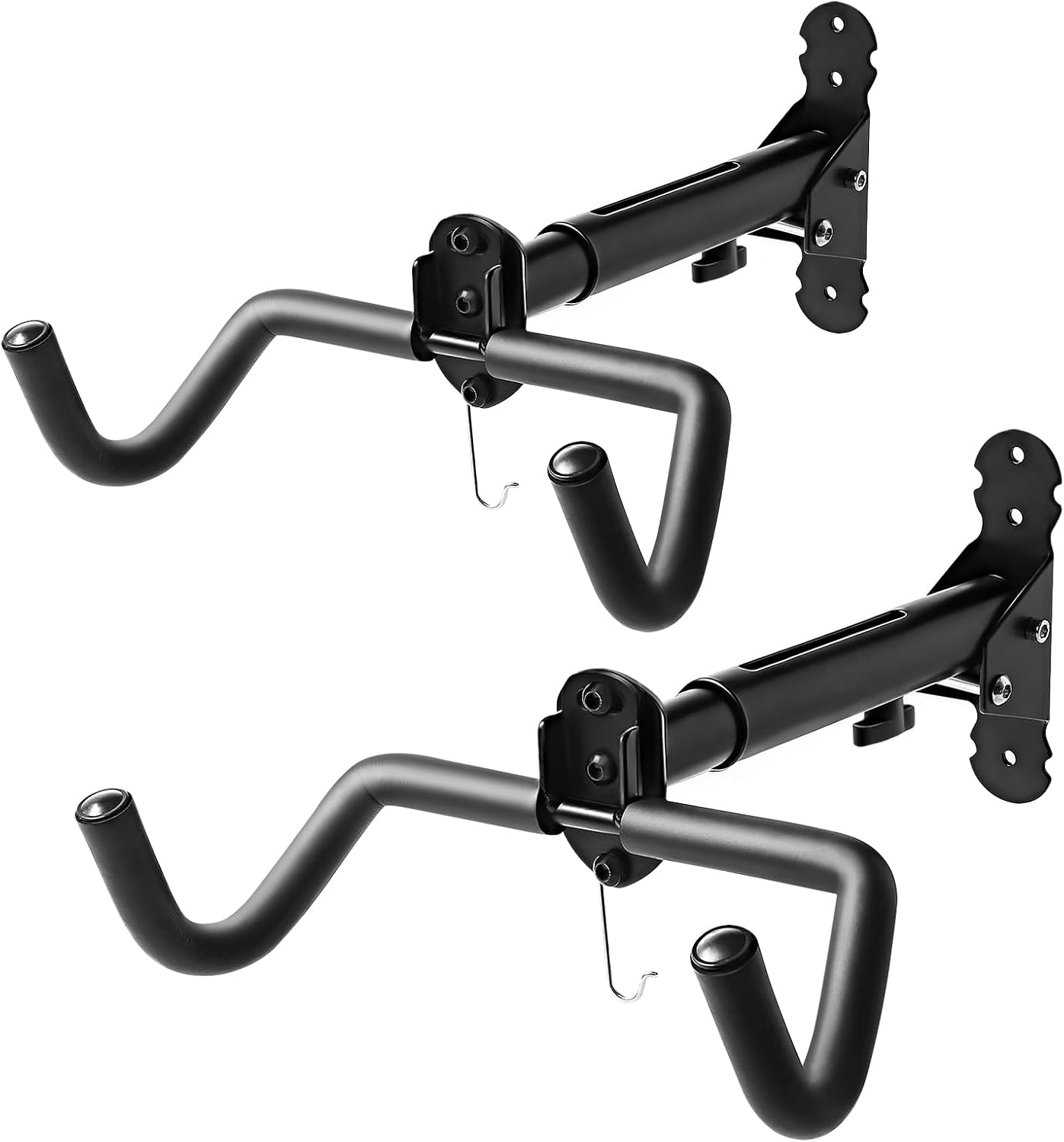 Visit on Amazon → Gootus Bike Wall Mount Hanger |
Horizontal wall hanger | Interior wall | 1 | $43.99 |
One note on that table. Capacity numbers are the manufacturer's, not mine. Add up your own bikes before you trust any of them.
Should you buy the Thule T2 Pro XT/XTR?
Yes, if you ride carbon, if you have a 2-inch receiver, and if the rack is going to live on the car for most of the season. Nothing touches your frame, the loading sequence is muscle memory by the third ride, and the tilt gets you into the hatch without unloading. It is the rack I would hand to a friend with a nice bike and no patience for fuss.
It is heavy and it is expensive, and I will not pretend otherwise. If you take the rack off between rides and store it on a shelf, you will resent the weight every single time. If it stays on the car, you will forget it is there until you need it. That is the trade, and for a frequent rider it is the right one.
Should you buy the WEIZE Hitch Bike Rack?
Yes, if you want the tray loading pattern at a mid-tier price and your bikes are standard, fat tire, or electric. It tilts, it folds, and it is designed around the bikes people actually ride now rather than the bikes people rode a decade ago. The 160-pound combined capacity covers most two-bike garages, including one e-bike plus one regular bike, as long as you do the math first.
Check the hitch bolt and the anti-rattle hardware after your first long drive. That advice applies to every rack in this guide, and it applies double to a budget rack. Torque it, drive it, check it again. If it is still quiet at 75 mph, you got the deal you were hoping for.
Should you buy a wall mount instead?
If the question is storage rather than transport, buy the wall mount. Four fixed hooks for the whole household if you have a garage wall to spare. One horizontal hanger if you live in an apartment and ride the same bike every day.
And if you can only afford one purchase this year, buy the hitch rack first. A wall mount protects your floor space. A hitch rack protects your bike.