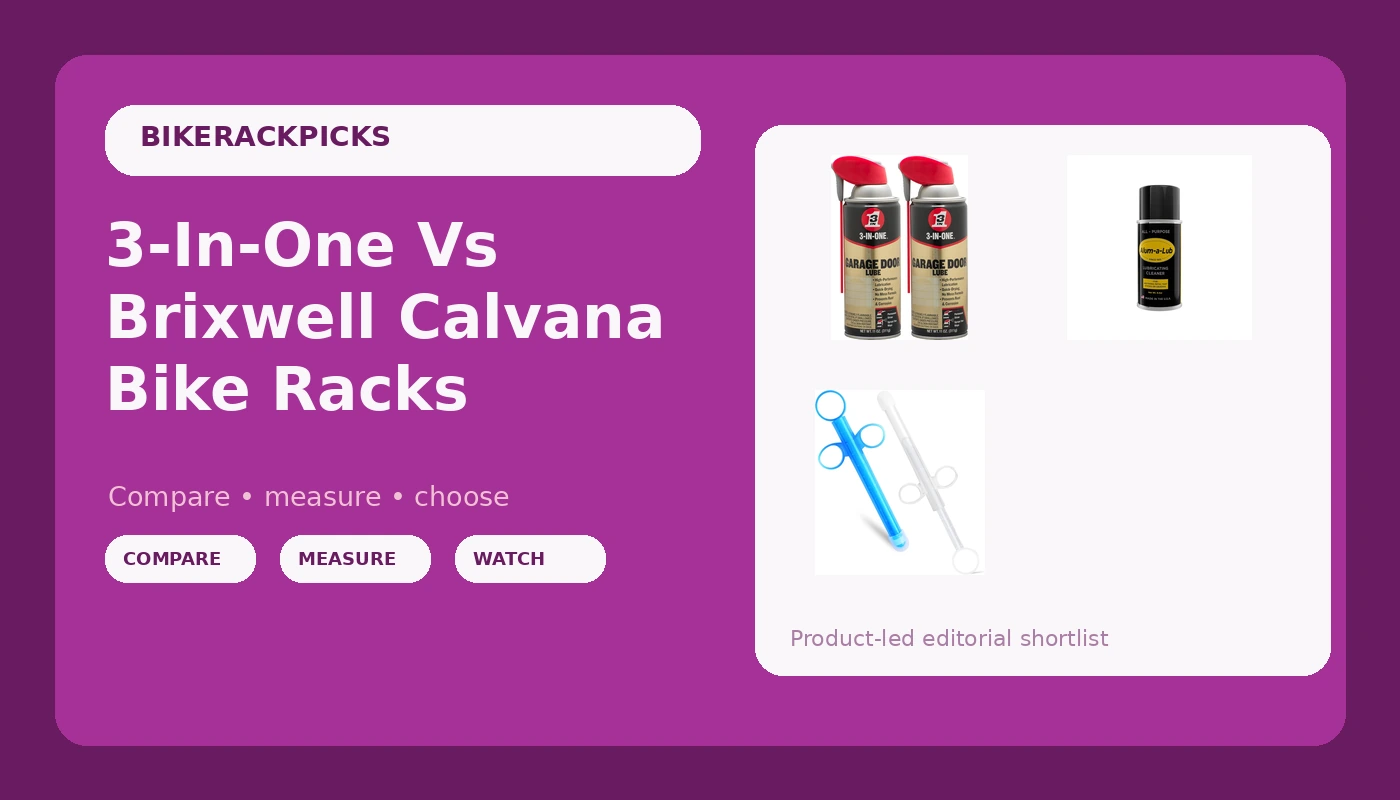
I have owned eight bike racks in twelve years: a trunk strap that scratched the paint on a leased wagon, a hanging rack that swung into a highway divider with two bikes on it, and a tray rack that survived a deer strike with nothing worse than a bent wheel tray. What all of them had in common was a slow death by pivot. The arms seize, the tilt latch gets gritty, the hitch pin rusts, and the lock cylinder stops turning halfway. So when people search Blaster vs Calvana bike racks, I understand the instinct: line up the racks, pick the better one, be done. But the comparison that actually keeps a rack on your car for a decade is the maintenance one, and that is what this page covers. These are three products that keep the moving parts moving.
Related: Hitch rack wobble at 75 mph and what actually fixes it
The one I would buy first is the 3-IN-ONE Professional Garage Door Lubricant two-pack, because a garage door lubricant is built for exactly the duty cycle a rack pivot sees (slow, loaded, weather-exposed), the Smart Straw reaches into the tight spots without disassembly, and the second can lives in the car. That is the short answer. The longer answer involves aluminum tray arms, dust, and one product here that is not a garage product at all.
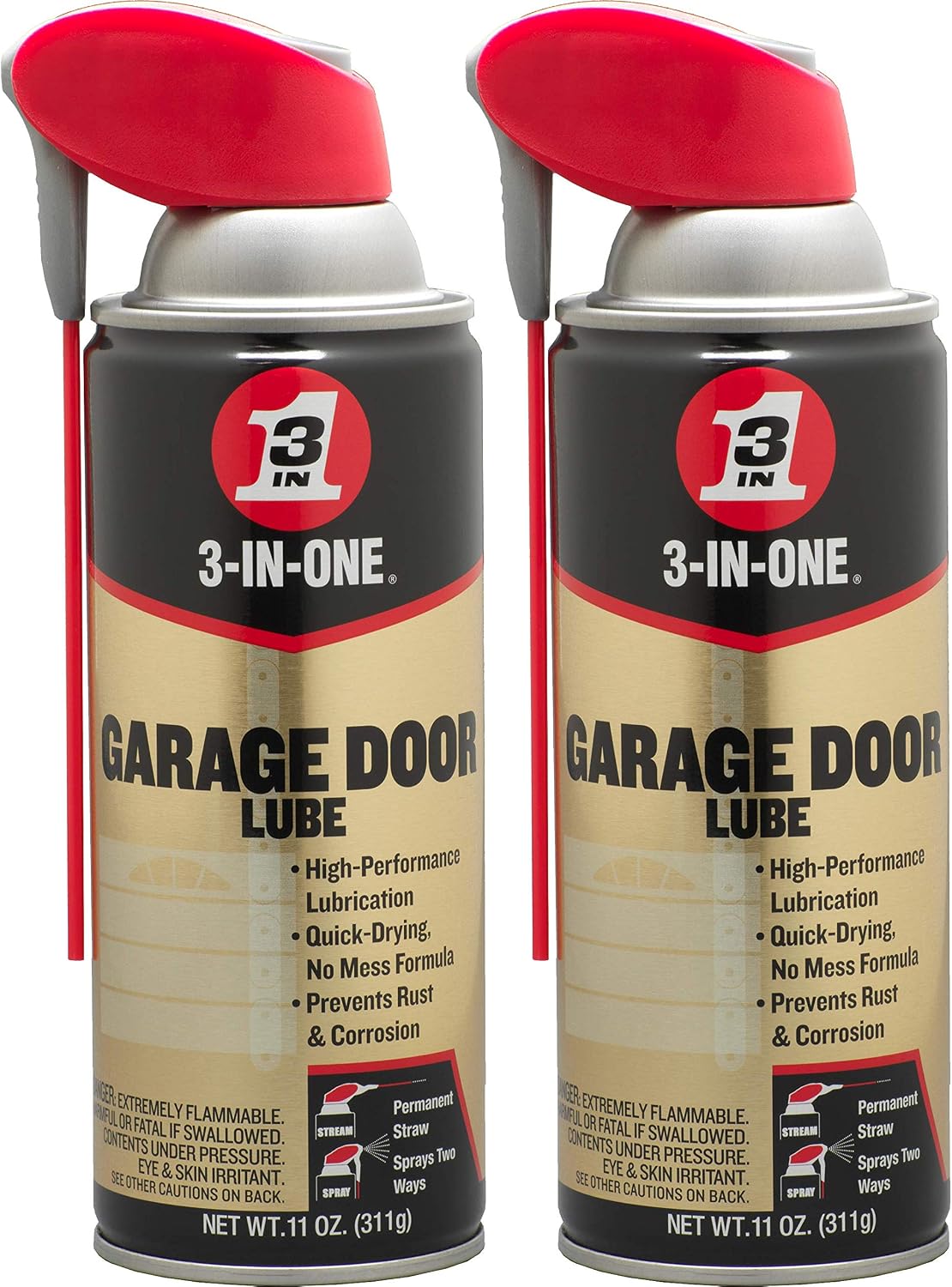
3-IN-ONE Professional Garage Door Lubricant, Smart Straw, 11 OZ [2-Pack]
Smart Straw reaches pivot pins and latch plates, two cans means one stays in the car, correct duty cycle for rack hardware
It lubricates but does not clean, so old grit stays put until you wipe it off
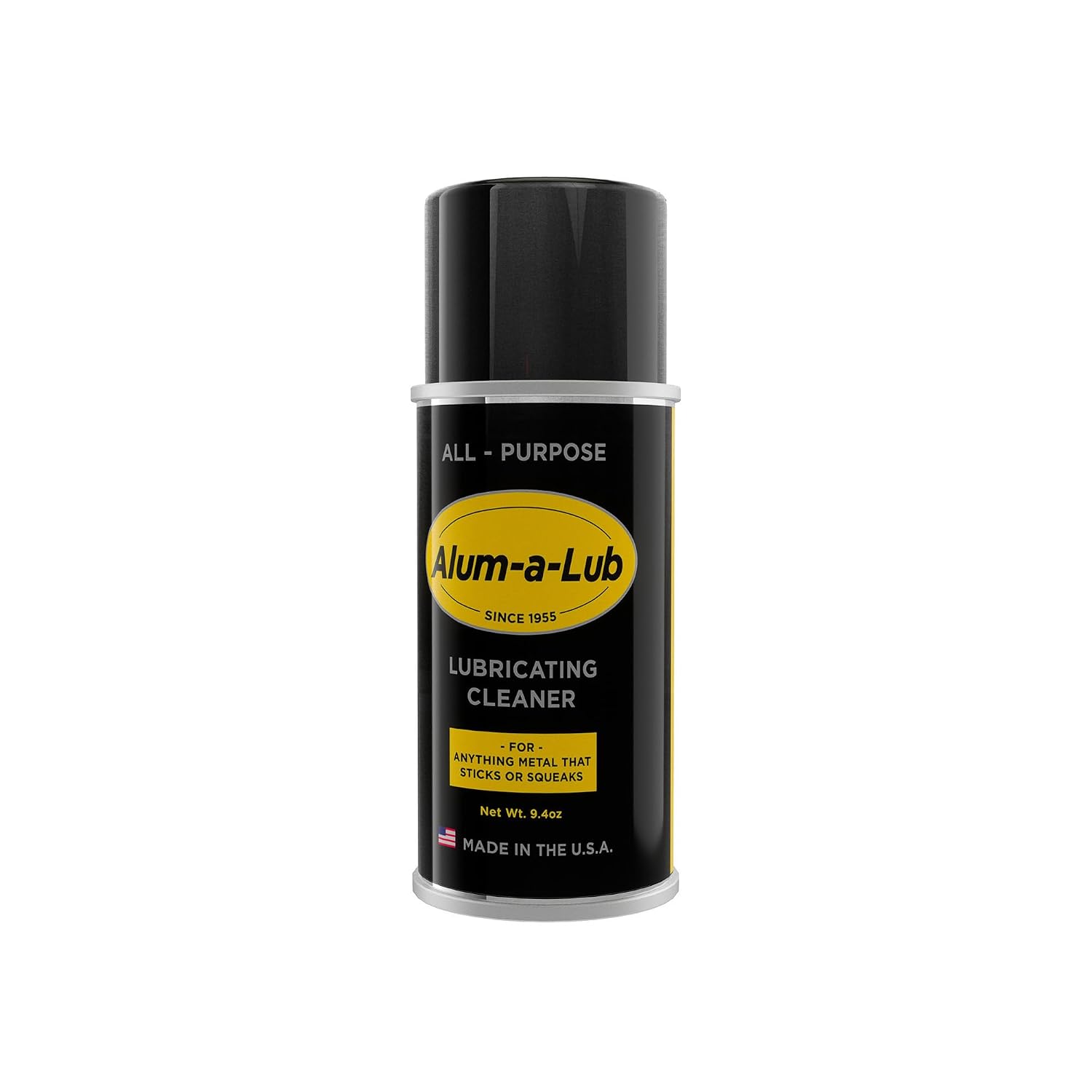
Alum-A-Lub All Purpose Lubricating Cleaner for All Metals - 9.4 Oz Can, Garage Door Lubricant, Silicone Spray, Penetrating Oil, Multi-Purpose Cleaner for Metal
Cleans and lubricates in one pass, formulated for all metals including aluminum tray arms
Plain spray nozzle is less precise than a straw, and silicone residue collects dust on gravel roads

lube applicator [2 Pack+Storage Bag] for Women,Men,Female Lubricant Tube Shooter with 10ml Scales, Reusable, Smooth with Rounded Tip & Cap,Easy use/Clean
Graduated barrel meters drops precisely into lock cylinders and cable runs, capped and reusable
Not a metal lubricant and not designed for solvent-based oils, so it is a tool, not a product
Prices and availability were captured from Amazon Creators API and may change.
How I test rack lubricants
I do not trust a can because it says "garage door" on the label. I trust it because of what happens to a rack pivot over a Colorado winter and a summer of gravel road dust. My evaluation routine for anything that touches a hitch rack has three stages, and they map to how the rack actually gets used.
The load test is first. A rack gets mounted and loaded in my driveway at night with the dome light on, because that is the real workflow after a long ride. I care about whether the tilt latch releases cleanly with a bike aboard, whether the arm pivots move without a jerk, and whether the hitch pin threads engage by hand. Anything that makes the rack stickier rather than freer fails here.
The highway run is second. US-36 up to Estes Park, washboard gravel outside Nederland, and a January ski lot at 20 degrees. I listen for creaks, watch for grit sticking to the lubricated surface, and check whether the wheel straps still cam over properly after a few hundred miles of dust. A lubricant that turns into a dust magnet makes a rack louder, not quieter.
The buyer's chair is third. At some point the question stops being "which product" and becomes "what does a weekend gravel rider with a 2-inch hitch actually need in the trunk". That is a different question, and I answer it at the end.
Blaster vs Calvana bike racks: what this comparison actually covers
The Blaster vs Calvana bike racks query is a rack-to-rack question, and it deserves a straight answer about scope. This page is not a rack shootout. It is the maintenance layer underneath one, the part that decides whether the tray rack you bought in 2026 is still folding smoothly in 2033.
Here is the wear map on a modern tray rack. The arm pivots take the load and get the most grit. The tilt mechanism sees a hard, low-speed load every time you drop the rack to open the hatch. The hitch pin and the anti-rattle bolt live in road spray and salt. The lock cylinders are the first thing to seize, because nobody lubricates them until the key snaps. The wheel strap cams and the buckle springs are plastic and metal working against each other, and they squeak long before they fail.
Three of those five points want a thin, penetrating film. Two of them want a cleaner first, because you cannot lubricate a surface that is already packed with road grit. That is the difference between the products below, and it is why I keep more than one of them around. If you are comparing rack brands rather than rack maintenance, start with how the rack attaches to the car, because hitch class decides more than the rack does.
The 3-IN-ONE two-pack: the one that stays in the trunk
Garage door hardware and bike rack hardware are cousins. Both are slow-moving, load-bearing, weather-exposed metal joints that nobody thinks about until they shriek. A lubricant formulated for door tracks, rollers, hinges and springs is aimed at exactly that duty cycle, which is why this is the can I reach for first on arm pivots.
The Smart Straw is the feature that earns it a spot. On a tray rack, the pivot pins sit inside a folded aluminum channel, and a wide spray pattern just coats the outside of the housing. A straw delivers the lubricant to the pin. Same story at the tilt latch plate and the anti-rattle bolt threads, both of which are recessed and both of which are where a rack develops its highway rattle.
The two-pack is not marketing filler. One can lives on the garage shelf next to the torque wrench, and the other lives in the spare tire well with a rag and a pair of nitrile gloves. Rack problems show up in parking lots, not driveways, and the can that is 40 minutes away at home is useless when your tilt latch will not release at a trailhead.
The honest limitation: this is a lubricant, not a cleaner. If your rack has a winter of magnesium chloride paste on the pivots, spraying lubricant over it just seals the grit in. Wipe first, then lubricate. That is not a knock on the product, it is the order of operations.
Check the 3-IN-ONE two-pack on Amazon
Alum-A-Lub: the aluminum-safe option for tray hardware
Modern tray racks are aluminum, and that matters. Aluminum does not rust, but it does corrode, and it does gall at pivot interfaces when two anodized surfaces run dry against each other. A product labeled for all metals, including the aluminum the tray is made from, is the one I want on the tray arms themselves rather than the steel hitch hardware.
Alum-A-Lub is a cleaner and a lubricant in one can, which is the practical advantage. On a rack that has done a spring of gravel riding, you can spray the arm pivot, let it work, wipe the grit out with a rag, and be done in one pass instead of three. That single-step behavior is worth real time when you are prepping two bikes the night before a race.
The trade-off is precision. The nozzle is a conventional spray head, so you get coverage rather than aim. On a wide, flat surface like a wheel tray or a frame cradle, coverage is what you want. On a recessed pin, it is not. My habit is to use this one for the tray surfaces and the general cleanup, and to keep a straw-tipped can for anything with a bore.
The second trade-off is residue. Silicone leaves a film, and film attracts dust. On pavement that is irrelevant. On the gravel roads west of town it means the tray arms come back looking fuzzy after a dry weekend. Wipe the excess off after the carrier dries and the problem goes away. Leave it wet and you have built a dust trap.
The graduated applicator: a tool, not a lubricant
This one needs a plain explanation, because it is not what the rest of this page is about. The lube applicator two-pack is a personal-care product: a 10 ml graduated barrel with a rounded tip and a cap, sold for metering lubricant in small, precise amounts. It is not a metal lubricant and it will not free a seized pivot.
What it is genuinely good at, in a rack context, is metering. The graduated markings let you put a controlled amount of oil exactly where you want it: the keyway of a hitch lock, the spring of a wheel strap cam, the threads of a hitch pin, the inside of a cable housing on a locking rack. Those are places where a spray can delivers too much and a bottle delivers too little. Two barrels and a storage bag means one can stay clean in the glovebox while the other gets oily in the toolbox.
Two boundaries I would hold. First, do not fill it with a solvent-based aerosol refill or anything with a strong petroleum distillate, because the barrel and tip are designed for a different chemistry and you are asking for a leak in your glovebox. Drip oil from a bottle is fine. Second, label it. A clear 10 ml barrel with a rounded tip looks exactly like something that should not be in a bike toolbox by accident, and the storage bag helps keep it separate.
At the price of a couple of inner tubes, it is the cheapest way to stop over-lubricating lock cylinders, which is the single most common mistake I see on racks. A flooded keyway collects grit and the lock gets worse, not better.
Check the graduated applicator two-pack on Amazon
What the wear pattern says
Across every rack I have owned, the failure order is remarkably consistent. Lock cylinders go first. Then the tilt latch. Then the arm pivots. The frame cradles and wheel straps last forever because they are plastic and nobody lubricates them.
That order tells you where to spend. A rack that folds and tilts smoothly but has a seized lock is a rack you cannot leave on the car overnight in a trailhead lot. A rack with a free lock and gritty pivots is annoying but usable. So the highest-value use of any lubricant here is the lock and the latch, not the big obvious arm joints. The applicator handles the lock better than either can does. The Smart Straw handles the latch plate better than the plain nozzle.
The pattern also explains why I do not recommend greases on a rack. A heavy grease stays where you put it, which sounds good until you realize that on an exposed rack it also traps every particle of road dust and turns into an abrasive paste. Thin films, applied often, beat thick films applied once, and that is true on a $200 rack and a $700 one.
One more thing the wear pattern says: any rack with four locks keyed to four different keys will eventually have one key that does not turn. That is a design problem, not a lubrication problem, but lubrication is what buys you the time to notice.
Should you buy a dedicated rack lubricant at all?
If you ride twice a year and the rack lives in the garage, a single can of garage door lubricant will outlast the rack. That is the honest answer, and it is the one most people should take. Buy the two-pack, keep one in the car, and stop reading.
If you are the weekend gravel rider with a 2-inch hitch who loads two bikes in the dark on Friday and drives three hours to a race, the answer is a small kit rather than a product. One straw-tipped lubricant for pivots and latches. One metal-safe cleaner for the tray arms after a dusty spring. One graduated applicator for the lock cylinders. That is the whole kit, it fits in a shoe box, and it costs less than a single wheel strap.
Where I would not spend: on specialty chain lubes repurposed for rack hardware, on greases, and on anything that promises to stop wobble. Wobble is an anti-rattle bolt and a hitch pin problem, and no spray fixes a loose connection. The Blaster vs Calvana bike racks question, asked as a rack comparison, is really a question about which rack will not rattle at 75 mph, and the answer to that is in the hardware, not the can.
What I am testing next
Two things are on my bench for the winter. First, whether a dry film lubricant holds up better than a wet one on tray arm pivots through a Colorado February, because the dust problem is real and a dry film would solve it if it survives the salt. Second, whether the new lightweight aluminum trays flex enough at the pivot to make lubrication irrelevant, which is the uncomfortable question in this whole category.
I keep a dated list of predictions and score it every January. The one I am most confident about: as tray racks keep getting lighter, the pivot hardware gets more critical, and the maintenance kit stops being optional. Racks are safety equipment. A seized tilt latch or a lock that will not release is how bikes end up on the highway. Check the rack before every trip, and check the trunk can while you are back there.